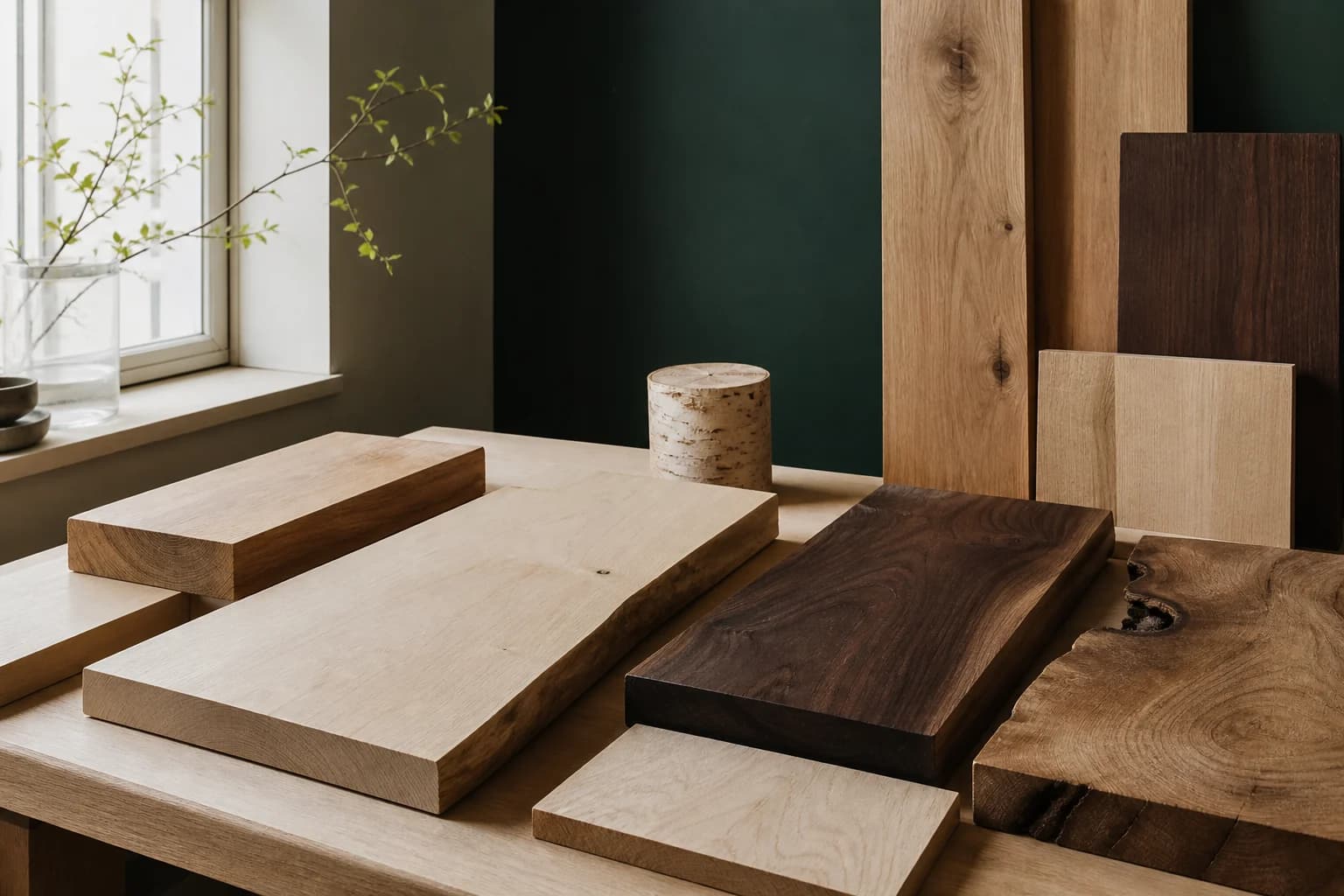
Growth and structure
Wood forms in trunks, branches and roots as plants grow lignified tissue. Growth rings, fibres, vessels, pores and resin canals create a directional structure. Wood therefore behaves differently along, across and around the grain. Sapwood and heartwood may differ in colour, moisture, extractives and durability.
Material properties
Density, hardness, elasticity, strength and natural durability vary between species and within a single tree. Moisture affects dimensions and weight: wood absorbs and releases water vapour. As it dries, it may shrink, distort or crack. Appropriate selection considers load, environment, grain direction and the intended surface.
History of use
People have used wood since early history for fire, tools, vessels, buildings, vehicles, furniture, musical instruments and sculpture. Many early wooden objects have not survived because organic material decays in unfavourable conditions. Regional forests, trade routes and available technology shaped which species were used and how they were worked.
Processing
Wood can be split, sawn, planed, carved, turned, bent, glued and made into engineered panels. Drying and storage are part of production. Cutting direction, sharp tools and construction must account for the grain. Surfaces range from unfinished wood to oil, wax, lacquer, paint and polychrome finishes.
Origin and responsibility
A species name alone says little about environmental impact or supply chains. Origin, forestry, transport, yield, service life and reuse all matter. Documentation and certification can provide guidance but do not replace scrutiny of a specific supply chain. Protected or internationally traded species may be subject to additional conservation and trade rules.


