Origin and appearance
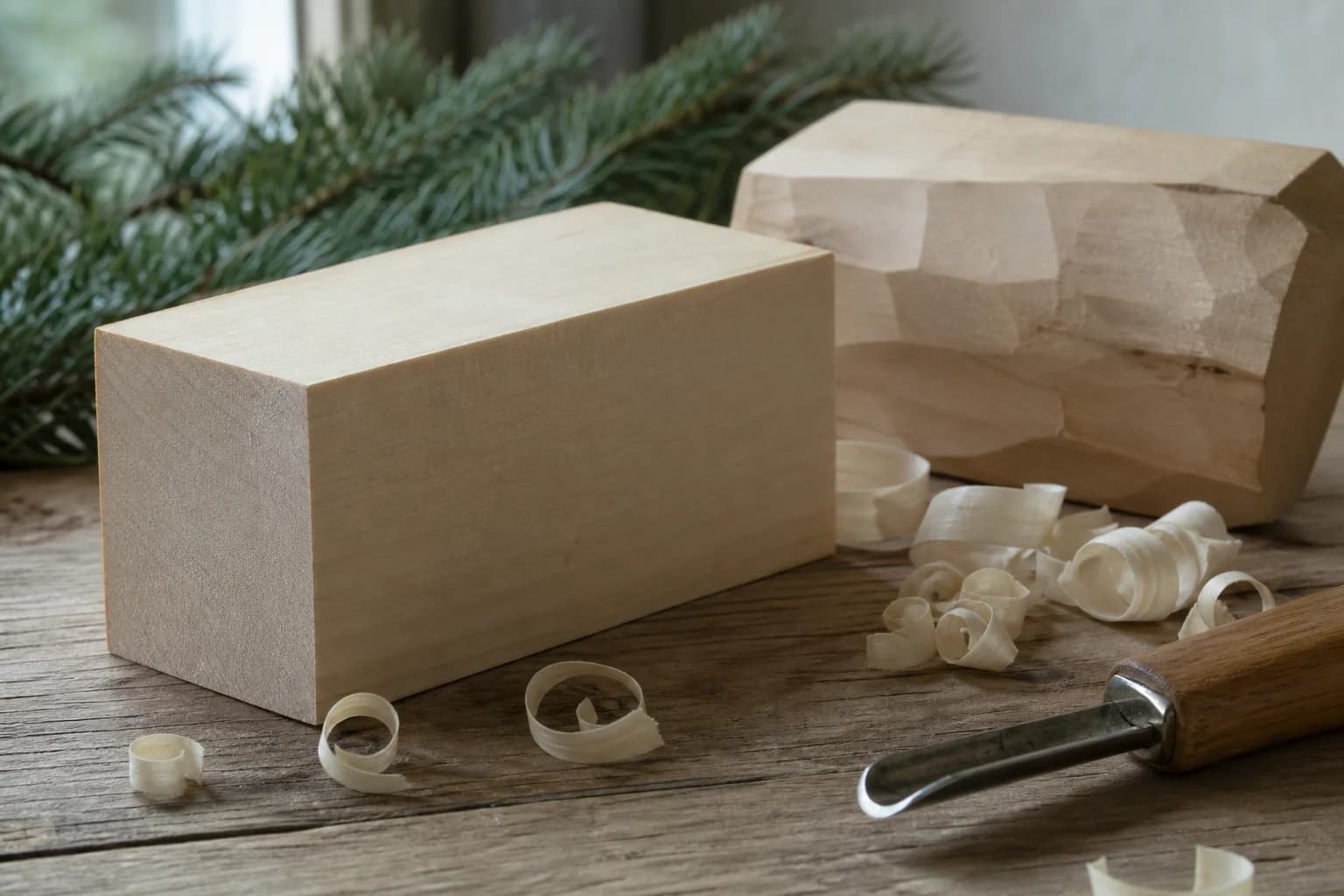
Lime trees belong to the genus Tilia, with species found across Europe, Asia and North America. The timber is usually whitish to pale yellow or slightly reddish. Sapwood and heartwood often differ little in colour. Its fine, relatively even structure allows carved detail to remain clear.
Properties
Limewood is relatively light and soft. With sharp tools it can be cut cleanly in many directions and good stock is not prone to heavy splintering. It has limited natural durability outdoors, so other species are often preferred for structural work or heavily worn surfaces.
History and use
In parts of Europe, limewood became especially important for sculpture and sacred works. Its fine structure supports smooth modelling, faces, drapery and deeply undercut ornament. It is also used for models, toys, masks, interior work and objects where easy shaping matters more than weather resistance.
Working and finishing
Evenly dried, knot-free stock is advantageous for detailed cuts. Blunt tools may compress very soft areas instead of cutting them. Limewood may remain unfinished, or be painted, gilded, polychromed or given a transparent finish. Its pale colour provides a quiet base for many surface treatments.
Care and identification
Unfinished limewood is sensitive to moisture, dirt and mechanical pressure. Historical surfaces may carry grounds, paint or later additions and should not be cleaned without assessment. The name limewood describes a material group; exact species, origin and quality need separate documentation for a specific object.

